 719-661-5310
There is this sprawling, completely invisible architectural world hiding right in your backyard. Most of the time, you might just walk out onto your patio or water the garden and completely miss these complex structures being engineered just inches out of sight. Until you accidentally get too close, because the architects of this hidden world usually just cause sheer unadulterated panic.
Nest Architecture
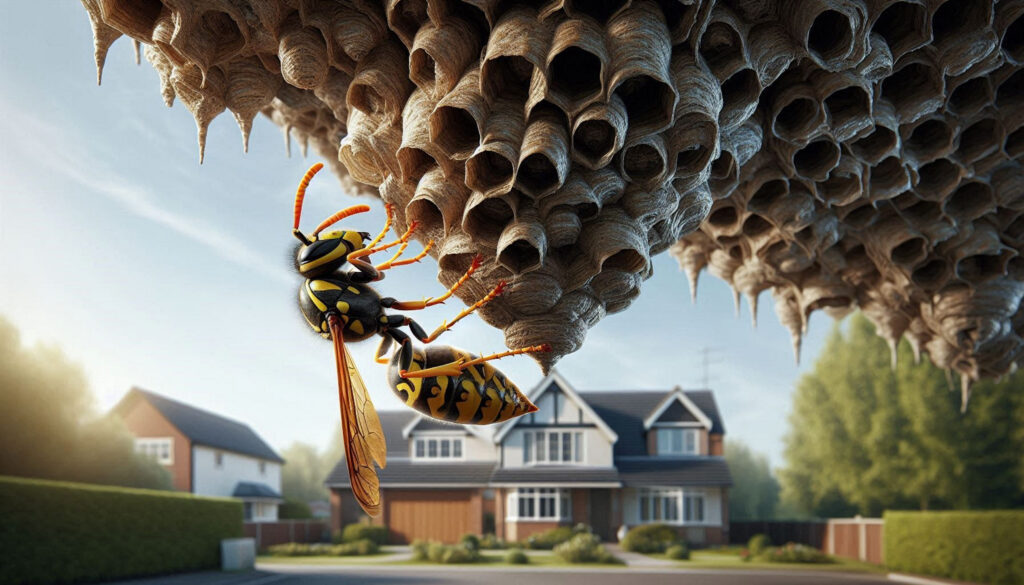
A wasp’s nest is a direct physical reflection of its social structure and its danger level. Wasps are very common, especially during the spring and summer. With paper wasp nests, you can literally see the hexagonal cells and the wasps just hanging out on them, feeding the larvae. They scrape wood fibers from old fences or dead trees and mix them with highly specialized proteins in their saliva.
Do You Have A Wasp Nest On Your Property?
Those proteins act as a water-resistant biological glue. They create a durable, weatherproof paper comb that can support the weight of the developing larvae. These are small, maybe the size of a golf ball up to a fist, hosting maybe 20 to 75 wasps.
Yellow Jacket Nests
Yellow jacket nests are hidden fortresses. You don’t see the individual cells at all. The entire structure is wrapped in this thick gray papery envelope. Many yellow jacket species actively seek out subterranean voids, abandoned rodent burrows or hollow spaces under landscape timbers.
They move in and begin excavating, actually carrying dirt out grain by grain to expand the cavity as the colony grows. Their second strategy is aerial nests, massive gray footballs high up in trees or attached to the sides of buildings.
Bald-Faced Hornets
Bald-faced hornets build the mansions of the wasp world. They start small in the spring, but they can grow to be 2 ft across by the fall. That massive multi-layered paper envelope traps insulating air. It allows the colony to maintain a stable internal temperature for the larvae regardless of the wildly fluctuating weather outside.
Mud Daubers
Mud daubers are the custom clay studios. No paper, no chewed wood, just pure mud. Pipe organ mud daubers literally build parallel tubes that look like organ pipes. Black and yellow daubers build these clumpy round blobs. Blue mud daubers simply locate an abandoned mud nest, bring in some water to soften the old clay, refurbish the interior, and pack it with their own paralyzed spiders.
What Draws Wasps to a Yard?
Wasps don’t just materialize out of thin air. They follow the resources. The two massive magnets in any residential yard are water and food. Swimming pools, decorative fountains, even just the puddles left by lawn sprinklers. They need water for hydration, and they need water to manufacture their nests. Paper wasps and yellow jackets need moisture to mix with wood pulp, and mud daubers literally need water to mix their clay.
Then there is the food: fruit trees, blooming gardens, and especially hummingbird feeders. In warmer regions, the permissive temperatures mean the colonies don’t die off at the first frost. The queens can keep laying eggs much later into the year. A longer active season translates directly into exponentially larger, more dangerous nests.
Late Summer Danger
In the spring and early summer, the adult workers are hunting protein, insects, and caterpillars to feed the developing larvae. In return, the larvae secrete a sugary substance that feeds the adults. It’s a perfect feedback loop. In the fall, the queen stops laying eggs. The larvae mature. That internal sugar supply completely dries up.
Suddenly, thousands of adult wasps are essentially addicted to sugar, starving with no larvae to feed them. At the same time, natural food sources in the environment are dying off. They pivot from hunting protein to aggressively scavenging for carbohydrates.
When to Leave a Nest Alone?
Coexistence is incredibly viable if you understand the risks. If the nest isn’t threatening human safety, let it operate. Mud daubers are docile, free spider control; leave them alone.
If you have a small paper wasp umbrella tucked away on a remote fence line far from foot traffic, let them hunt garden pests. If you discover a nest in late November, the incoming cold weather is going to naturally eliminate the colony anyway.
When Removal Is Necessary?
There are clear red flags for when removal is non-negotiable. Location is huge. If a nest is in a high-traffic area, like near doorways, play structures, pools, or outdoor dining spaces, it has to go. If anyone in the home has a known wasp allergy, you cannot roll the dice with coexistence.
Also, basically any yellow jacket or bald-faced hornet nest, ground nest near lawns, or any nest inside a home structure. If you identify a yellow jacket or bald-faced hornet nest, professional removal is almost always the right call because of their aggressive nature and massive numbers.


