
 719-661-5310
Finding a spider in your home is never a fun moment. And in Colorado, that concern is completely understandable. You should definitely get yourself checked if you are not. The state hosts over 600 spider species, and while most are harmless, some are not to be messed with.
Let’s go through some of the important things that you should learn and know.
What Is Spider Extermination?
Spider extermination is a professional pest control process that removes spiders from a place. It is different from prevention, which focuses on trying to stop them from coming rather than elimination.
Colorado hosts over 600 spider species, including 2 that are important for medical reasons. All spiders belong to the class Arachnida.
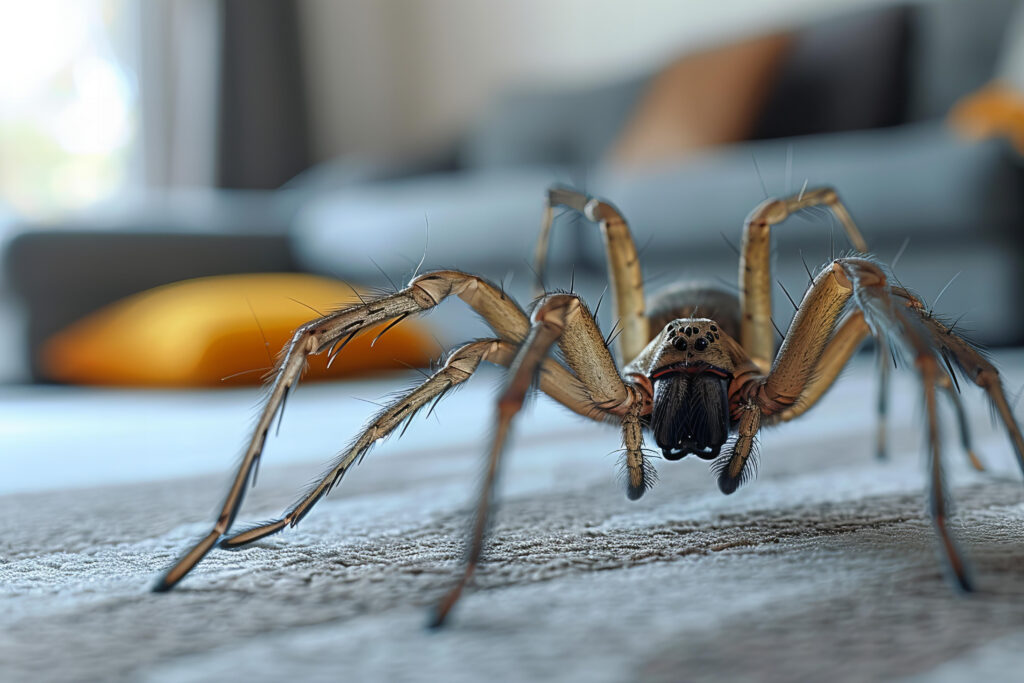
Spider Extermination In Colorado
They have 8 legs and 2 body segments that are the cephalothorax and the abdomen. Knowing that helps pest professionals identify and target the right species.
Which Venomous Spiders Are Found in Colorado Homes?
Three venomous spider species are found in Colorado homes, including the Western Black Widow, the Yellow Sac Spider, and the Brown Recluse. Each one behaves differently and hides in different spots. So it helps to know what each one looks like and where it tends to show up.
Western Black Widow (Latrodectus hesperus)
The Western Black Widow is the most famous venomous spider in Colorado, and for good reason. It has a shiny black body with a distinct red hourglass marking on its ventral abdomen. Western Black Widow females are 8 to 13 mm in body length. You are likely to find one just walking, like in a garage, near a woodpile, in an undisturbed corner, or in any shaded area below 7,000 ft elevation.
It’s dangerous because it has venom that contains alpha-latrotoxin, which triggers a condition called systemic latrodectism. This venom causes muscle cramps, heavy sweating, and a racing heart. Fortunately, antivenom made by Merck is available, but acting fast is very important. Seek emergency care if systemic symptoms develop within 1 hour of a bite.
Yellow Sac Spider (Cheiracanthium inclusum)
The Yellow Sac Spider is smaller and less dramatic-looking, but it is actually responsible for approximately 50% of all indoor spider bites in the US. Its pale yellow-green body is only 6 to 10 mm. It has dark chelicerae (jaws) and a thin dorsal stripe. Unlike web-building spiders, this one is a nocturnal hunter. It builds small silk retreat sacs in ceiling corners, behind picture frames, and under leaves outdoors.
Yellow sac spider venom is cytotoxic, which means it damages the skin and tissue where the bite occurs. You will start to feel mild symptoms like redness, swelling, and some pain. Research from UC Davis entomology shows that about 4 out of every 100 bites lead to small areas of dead tissue (necrosis) at the bite site.
Brown Recluse (Loxosceles reclusa)
The Brown Recluse gets a lot of attention in Colorado, though it is actually not native to the state. It is a tan-brown spider that is 6 to 11 mm in length. It has a violin-shaped dorsal marking on its cephalothorax. It is only seen in arid eastern plains counties in Colorado. Most brown recluse spiders found here hitchhike in cardboard boxes shipped from southern states.
Its venom contains an enzyme called sphingomyelinase D, which can cause skin damage in about 13 out of 100 bites. One important thing to note is that wolf spiders are often mistaken for brown recluse spiders in Colorado. If you are not sure, a pest professional can identify the spider for you.
What Are the Signs of a Spider Infestation in a Colorado Home?
Now let’s talk business. Nobody likes spiders, and they need to be dealt with. You need to keep an eye on these signs, or you will be sorry. Some of these are easy to miss, especially the early ones. Catch them soon and deal with them.
- Active webs in 3 or more separate rooms are a red flag because multiple web locations mean an increasing population.
- You saw a spider egg sac. No, it is not your suspicion. These silk-wrapped, pea-sized sacs each hold between 100 and 400 eggs. Better safe than sorry
- You start seeing them in the day, which means they are growing fast. This shows that they are running out of space and food, as spiders like to stay out of sight during the day.
- The presence of prey insects like fruit flies, gnats, and moths inside the house is dangerous. This is what spiders love to eat.
- You see their shed exoskeletons near baseboards. If you see molted cuticles, this confirms that spiders are growing and living as if it’s their home.
- Spiders leave bite marks, or you may face skin reactions overnight as they hide in bedding or clothing.
How Does Professional Spider Extermination Work in Colorado?
Professional spider extermination in Colorado follows 4 stages that include inspection, treatment, exclusion, and monitoring. This process aligns with the EPA’s Integrated Pest Management (IPM) framework. IPM reduces total pesticide use by 40 to 60% compared to spray-only programs. Most reputable pest control companies in Denver and Colorado Springs, like CM Pest Control, follow this method.
The professional method of spider extermination from Denver homes is given below.
- Inspection: Professional technicians identify the spider species present and locate all entry points. Each nook and cranny must be checked to make sure none of them stay behind.
- Targeted Treatment: Perimeter spray with pyrethroid-class insecticides is applied. Crack-and-crevice treatment reaches hidden areas, while webs and egg sacs must be removed manually.
- Exclusion: Gaps larger than 3 mm need to be sealed with silicone caulk. Spiders get in from below the doors, so sweeps need to be installed to block ground-level entry points.
- Monitoring: A follow-up inspection after 30 days must be done to confirm that the mission was a success. Seeing more than 3 spiders means the treatment was incomplete, and the horror named spiders will be back.
How to Prevent Spiders from Entering Your Home?
You got rid of the spiders, now what? Should we wait for them to come back? Nope, not at all. Follow the steps given below to keep them away from your house as long as possible.
- Seal exterior gaps larger than 3 mm with silicone caulk. Don’t be cheap and apply it around doors, windows, and all utility penetrations.
- Install 16-mesh or better window and door screens so they cannot invite themselves in. Fine mesh blocks spiders and their insect prey at the same time.
- Reduce outdoor lighting or switch to yellow sodium-vapor bulbs, as yellow bulbs attract 60% fewer insects than standard white LED bulbs.
- Store firewood at least 5 ft from the foundation and keep it at least 6 inches above the ground. Woodpiles are like an invitation to black widow spiders.
- Declutter storage areas. Yes, stop being a hoarder and stay clean. Use sealed plastic bins instead of cardboard boxes because these boxes are how brown recluse spiders hitchhike their way into your house.
- Vacuum webs and egg sacs weekly. And always, ALWAYS crush egg sacs before disposing of them to prevent hatching.
- Trim vegetation to maintain at least 12 inches of clearance from exterior walls, as dense plant branches can act like a bridge for spiders to enter.
- Fix moisture sources, such as leaking gutters and condensation points. Moisture is already not good for your house, and it also attracts the insects that feed spider populations.
- Apply diatomaceous earth along the baseboards where they keep coming back. It is advised to reapply it every 90 days for best results.
Conclusion
Spiders are not going anywhere on their own, and Colorado has plenty of them, so you are bound to make eye contact with them again and again. These squatters do not pay rent, and they are definitely not welcome. The good news is that you are not powerless. Get a professional to get rid of them if you are already seeing the signs. Follow the prevention steps like your comfort depends on it, because, surprise, it does.
Getting reliable help is the most crucial part. If you need much better than regular professionalism, be sure to contact us today. We’ll take care of things for you and escort those unwelcome guests out for you.


